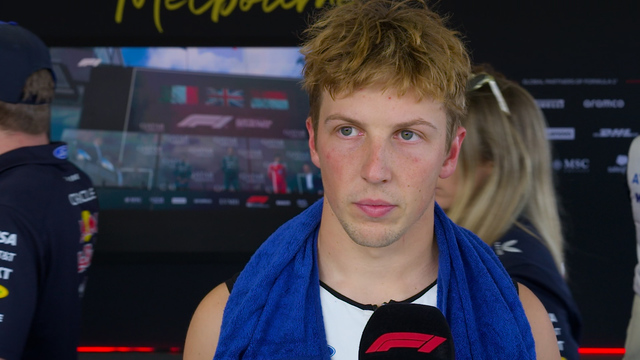
The Perilous Start: Lawson's Problematic Launch at the Australian GP
The Australian Grand Prix, always a spectacle of speed and strategy, delivered its usual dose of high-octane drama, particularly during the opening moments. For young drivers Liam Lawson and Franco Colapinto, the start line at Albert Park transformed into a high-stakes arena, showcasing both the unforgiving nature of Formula 1 and the incredible reflexes required to survive it. What followed was a scenario perfectly encapsulated by the phrase "lawson problema largada" – Lawson's problematic start – a sequence that nearly derailed two careers before the first corner.
Liam Lawson, stepping in for the injured Daniel Ricciardo at Racing Bulls, began the race from a promising eighth position on the grid. However, as the lights went out, his launch was anything but ideal. The Kiwi driver suffered an uncharacteristically slow getaway, leaving his car vulnerable amidst a roaring pack of competitors. In the blink of an eye, a prime grid slot became a hazard, creating a bottleneck that threatened immediate chaos.
Just a few rows behind, starting from 16th, Franco Colapinto, in his first full Formula 1 season with Alpine, found himself in the direct path of this unfolding drama. Traveling at immense speed, the Argentine rookie suddenly encountered Lawson's near-stationary car. The margin for error was non-existent. "En la largada casi tenemos un choque enorme con Liam, ya que se quedó detenido en la grilla y, para ser honesto, tuve mucha suerte de poder pasar esa primera vuelta. Tuve muchísima suerte, la verdad," Colapinto later recounted, emphasizing the sheer luck involved in navigating the situation.
Colapinto's lightning-fast instincts kicked in. With less than a second to react, he swerved sharply to his right, threading his Alpine between Lawson's car and the unforgiving pit wall. The move was so tight that he even reported a slight brush with the wall with his rear-right tire. This miraculous maneuver wasn't just about saving his own race; it also inadvertently helped Red Bull's Sergio Pérez, who, seeing Colapinto's evasive action, instinctively followed suit, avoiding a potential multi-car pile-up. It was a testament to Colapinto's spatial awareness and car control under extreme pressure, a moment that went largely unseen by the official television broadcast but was critical to his continued participation in the race. For a deeper dive into this incredible moment, read about Colapinto's Epic Reflexes Avert Lawson Crash at Australian GP.
A Costly Procedural Error: Alpine's Unforced Penalty
While Colapinto's heroic save averted an early exit, his race was far from over, and unfortunately, more drama awaited him. Shortly after the heart-stopping start, word came through of a potential penalty against the Alpine driver for a procedural infringement. The cause was traced back to a seemingly innocuous pre-race action: one of his mechanics had pushed his car when it was no longer permitted to do so, before the formation lap.
This technicality, often overlooked by casual viewers, carries significant weight in the tightly regulated world of Formula 1. Teams operate under stringent rules regarding car handling on the grid, designed to ensure fairness and prevent any unfair advantage. The penalty imposed was a severe one: a stop & go, which forced Colapinto to pit, stop for a mandatory period, and then rejoin the race. This sanction effectively cost him over 30 seconds, a massive blow to any hopes of a competitive finish.
Colapinto himself admitted to some confusion regarding the exact nature of the infringement but was clear that it was a team error. "Ni Colapinto supo bien qué pasó, pero quedó claro que fue culpa del equipo, por algo que hizo y que fue severamente castigado," confirmed reports, highlighting the driver's detachment from the procedural mistake but the severe impact it had on his race. For any F1 team, such an unforced error is particularly frustrating, especially when it derails a driver's efforts through no fault of their own. It underscores the critical importance of meticulous attention to detail and flawless execution from every member of the pit crew, not just the drivers.
The stop & go penalty transformed a challenging race into an uphill battle for Colapinto. It was an unfortunate turn of events that compounded the difficult start and further illustrates the fine margins and strict regulations that define Formula 1. This costly penalty, coming right after his near-miss with Lawson, defined much of his Australian GP experience. You can find more details on this incident in Colapinto's F1 Australia: Lawson Near-Miss & Costly Alpine Penalty.
Battling On: Colapinto's Race & Alpine's Weekend Challenges
With the drama of the problematic start and the sting of the stop & go penalty behind him, Franco Colapinto faced what he described as "una carrera larga" – a long afternoon. Despite his exceptional reflexes in avoiding Liam Lawson's stalled car, the subsequent penalty severely compromised his ability to make significant progress through the field. He ultimately finished the race in 14th position, two laps down from the leaders.
The Australian GP proved to be a challenging weekend for Alpine as a whole, not just for Colapinto. The team had entered Melbourne with higher expectations after their performance in Bahrain, but found themselves struggling with fundamental pace. "Tuvimos problemas de ritmo este fin de semana. Esperábamos mucho más después de Bahréin," Colapinto commented, reflecting the team's disappointment.
While Colapinto battled through adversity, his teammate Pierre Gasly managed to salvage a single championship point by finishing in tenth place. This result, though modest, offered a small silver lining for Alpine, indicating that there was still some underlying potential, especially in race trim. Colapinto acknowledged this, stating, "Eso fue positivo, por supuesto. Creo que en este momento somos más competitivos en carrera que en clasificación."
However, the disparity between their race and qualifying pace remains a significant area for improvement. "Necesitamos entender por qué y mejorar en ambas cosas. Creo que ahora mismo definitivamente hay más potencial en carrera, en los stints largos, que en la clasificación," Colapinto concluded. This highlights a critical challenge for Alpine: unlocking consistent qualifying performance to give their drivers a better starting position, thus avoiding the perils of a crowded midfield and maximizing their race-day potential.
Lessons Learned and The Road Ahead for Rookie & Team
The Australian Grand Prix was a microcosm of the challenges and opportunities that lie ahead for both Franco Colapinto and the Alpine F1 team. For Colapinto, it was a baptism by fire, showcasing his exceptional reaction skills during the near-collision with Liam Lawson, but also exposing the vulnerability of a rookie driver to team errors and the harsh realities of F1 penalties.
Practical Takeaways from Melbourne:
- Driver Instincts are Paramount: Colapinto's avoidance of Lawson's stalled car highlights the non-negotiable need for split-second decision-making and precise car control at the highest level of motorsport. This isn't just about speed; it's about survival.
- Flawless Team Execution is Critical: The stop & go penalty serves as a stark reminder that F1 is a team sport where even minor procedural infractions by any member can have devastating consequences for the driver's race. Consistency and strict adherence to protocol are non-negotiable.
- Pace Discrepancy Analysis: Alpine's struggle with qualifying pace versus race pace is a common challenge for teams. Understanding the aerodynamic and mechanical factors contributing to this disparity is crucial for their development path. Targeted analysis of tire performance, car balance in short vs. long runs, and setup philosophy will be key.
- Rookie Resilience: Despite the setbacks, Colapinto finished the race, gathered data, and maintained a positive outlook. This mental fortitude is vital for young drivers navigating their inaugural F1 seasons, where learning curves are steep and disappointments can be frequent.
From a broader perspective, Alpine's season has started with more questions than answers. While Gasly's point was a small victory, the team's overall performance suggests a significant amount of development work is still needed to climb the competitive ladder. Colapinto's experience, particularly the "lawson problema largada" incident, underscores the importance of starting positions. The further back a driver starts, the higher the risk of being caught in multi-car incidents, making qualifying pace a strategic imperative.
Colapinto's closing remarks—"Pero creo que tenemos mucho trabajo por hacer. Ojalá en China podamos volver más fuertes y aprender de esta semana"—encapsulate the resilient spirit needed in F1. Every race, even a difficult one, is a learning opportunity. The team will be pouring over data, looking to understand their pace issues and rectify procedural mistakes. For Colapinto, it's about internalizing the lessons from Melbourne, sharpening his skills, and turning adversity into experience.
The Australian Grand Prix provided a dramatic illustration of the fine margins in Formula 1. Liam Lawson's problematic start created a terrifying hazard, which Franco Colapinto's quick thinking incredibly navigated. However, a subsequent team penalty overshadowed this display of skill, turning a challenging race into a definitive learning experience for the rookie. As both Colapinto and Alpine look ahead to the next race in China, the focus will undoubtedly be on addressing their fundamental pace issues and ensuring flawless execution from every angle, aiming to translate their raw potential into tangible results on the track.